Tahitian Pearls South Africa
French Polynesia. The black-lipped oyster. The only naturally dark cultured pearl.
A Tahitian pearl is grown inside the Pinctada margaritifera, a black-lipped oyster native to the warm lagoons of French Polynesia. The oyster's mantle tissue contains dark pigment, and when it secretes nacre around an implanted nucleus, the resulting pearl takes on the natural colours of the mantle: charcoal grey, bronze, peacock green, deep aubergine, and the rare Tahitian black with iridescent overtones. No dye, no treatment, no enhancement. The colour is the pearl.
Heritage & Co.'s NOTTURNO collection uses Tahitian pearls graded AAAA. AAAA is the highest commercial grade for Tahitian, South Sea, and freshwater pearls. The grading covers four traits: luster (mirror-bright reflection at the pearl's surface), surface cleanliness (95 percent or more of the surface free of visible imperfection), shape (round or near-round, with off-round and baroque shapes graded separately), and nacre thickness (the layered coating, measured in millimetres). An AAAA Tahitian meets all four.
Where Tahitian Pearls Come From
The Tahitian pearl industry is concentrated in the Tuamotu and Gambier archipelagos of French Polynesia. The Pinctada margaritifera oyster is one of the largest pearl-producing molluscs, with adult specimens reaching 30cm in shell diameter. The larger oyster accepts a larger nucleus, which is why Tahitian pearls run 8mm to 14mm, larger than Akoya (typically 6 to 9mm) and overlapping with smaller South Sea (typically 10 to 15mm).
Cultivation requires the oyster to be returned to the lagoon for 18 to 24 months after nucleus implantation. The cool, mineral rich waters of French Polynesia produce a slow, even nacre deposition, which is why Tahitian pearls develop the deep, oil-on-water iridescence you see in the best examples. The industry is heavily regulated. Export of loose Tahitian pearls requires certification from the Direction des Ressources Marines.
The Colour Range
Tahitians are the only cultured pearls naturally produced in dark tones. The body colour ranges from silver grey through bronze, copper, aubergine, peacock green, and the prized deep black with rainbow overtones. Each colour has subtle variations. Peacock can run blue-green to green-purple depending on the orient. Aubergine can be near-black to deep wine.
Heritage & Co.'s NOTTURNO grading specifies dark body colour with peacock or aubergine overtones as the preferred profile. Lighter grey or near-silver Tahitians are graded differently and sourced for specific designs only.
Heritage & Co.'s NOTTURNO Collection
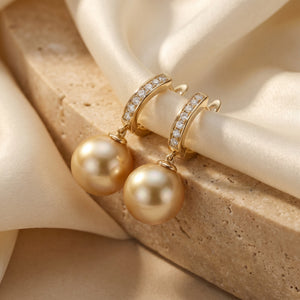
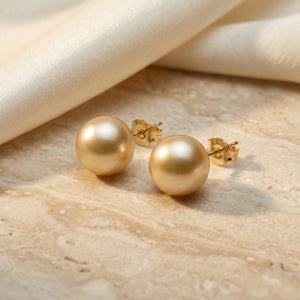
NOTTURNO takes its name from the Italian word for nocturne, after the deep colour palette of the Tahitian. Every piece uses AAAA grade Pinctada margaritifera pearls from French Polynesia. Metal options are 18K gold or 950 platinum. The collection includes single-pearl studs, pearl-and-pavé pendants, and station bracelets.
Heritage & Co.'s position on pearls: cultured only (no claim of natural), graded type by type to the specific scale, set in solid metal only, 20 year defect warranty. The NOTTURNO collection is made to order.
How Tahitian Compares to Other Pearls
Within saltwater pearls, Tahitian is the only naturally dark type. Akoya is small and bright. South Sea is the largest and runs from white to gold. Tahitian sits in the middle on size (8 to 14mm) and dominates the dark-tone category entirely.
Against freshwater dyed dark pearls, the difference is structural. Freshwater dyed black pearls are common, less expensive, and visually distinct (the dye sits in the surface layer and shows up unevenly under magnification). A natural Tahitian shows its colour right through the nacre.
Pearl Care
Tahitian pearls are slightly more resilient than Akoya, but the maintenance protocol is the same. Avoid ultrasonic cleaning, steam, harsh detergents, and chlorine. Wipe with a soft cloth after wear. Store flat in a soft pouch (not hanging on hooks, which stresses the silk thread). For strung necklaces, restring every two to three years.
For the full pearl care guide, read our Heritage Journal pearl care article.
View the Collection
Browse the NOTTURNO Tahitian AAAA Collection, studs, drops, pendants, and station bracelets in 18K gold and 950 platinum.