Most people never think to ask whether their gold jewellery is hollow or solid. The jeweller doesn't volunteer it. The packaging looks identical. The price difference is never explained. But inside that bangle you paid R4,500 for — there's nothing. A paper-thin shell of gold, wrapped around air. This is the quiet secret that mass-market jewellery brands have built their margins on for decades.
What hollow gold actually is
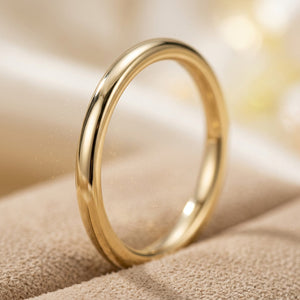
Hollow gold jewellery is exactly what it sounds like: a piece that is gold on the outside and empty on the inside. Manufacturers produce it by forming thin gold tube or sheet — typically between 0.3mm and 0.5mm thick — into rings, bangles, chains, and earrings. To put that in perspective, a standard credit card is 0.76mm thick. The wall of a hollow gold bangle is often thinner than that. A human hair is roughly 0.07mm in diameter — hollow gold walls are approximately four to six human hairs stacked side by side.
The technique exists for one reason: to use less gold. A hollow gold bangle might look identical to a solid one. It may even feel similar in weight if the manufacturer adds a slight thickness to the tube. But it contains a fraction of the actual gold content — and commands a fraction of the real durability.
The low-carat problem compounds it
Hollow construction is only half of the issue. The second layer of cost-cutting is carat. In South Africa, much of the mass-market gold jewellery sold in chain stores is 9-carat gold — which is only 37.5% pure gold. The remaining 62.5% is base metals: copper, zinc, silver alloys. Combined with hollow construction, you may be wearing a piece that is thin-walled, largely non-gold, and structurally fragile — presented in a velvet box at a price point that implies quality it doesn't contain.
This isn't fraud. It's legal. It's disclosed, technically, in the hallmark stamp on the piece. But most buyers don't know what to look for, and most retailers don't explain it.
Why hollow gold fails — and how
The structural weaknesses of hollow gold are predictable and well-documented:
Denting and deformation. A hollow bangle or hoop earring has no internal support. Moderate impact — catching it on a drawer, pressing it between two hard surfaces — can permanently dent or collapse the form. Solid gold deforms far less easily and can typically be reshaped by a jeweller. A crushed hollow piece cannot.
Cracking at stress points. The thinnest sections of hollow gold — clasps, joins, where tubes meet settings — are the first to crack. Over years of daily wear, thermal expansion and contraction fatigues the metal at these points. A crack in hollow gold often means the piece is finished. There's nothing to solder onto.
Irreparable sizing damage. Resizing a hollow ring requires cutting and stretching the band. On a solid band, this is routine work. On a hollow band, the interior cavity means the jeweller is working with a shell — any significant resizing risks collapsing or splitting it. Most jewellers will decline to resize a hollow ring, or will warn you the risk is entirely yours.
Polishing limits. Every time a jeweller polishes a piece, they remove a microscopic layer of gold. On a solid piece, this is trivial — there are millimetres of metal to spare. On a hollow piece with 0.3–0.5mm walls, repeated polishing over the years will eventually wear through. The piece cannot be refinished indefinitely.
What solid gold actually means
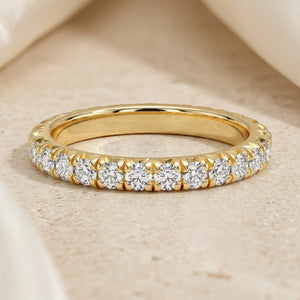
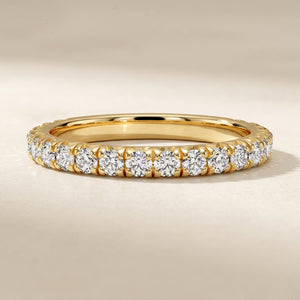
Solid gold jewellery is constructed from a continuous mass of gold alloy — no hollow core, no air gaps, no thin shell. The entire cross-section of the metal is gold alloy, whether that's 9-carat, 14-carat, or 18-carat. This means the piece has genuine structural integrity, can be resized and repaired by any qualified jeweller, will accept polishing and refinishing over a lifetime, and will not collapse, crack, or deform under normal wear.
Solid gold costs more to produce because it uses more gold. A solid 14-carat ring uses significantly more gold by volume than a hollow one of the same appearance. That cost difference is real — and it's the difference between a piece you wear for a decade and a piece you wear for a lifetime.
Why Heritage & Co. only stocks solid gold
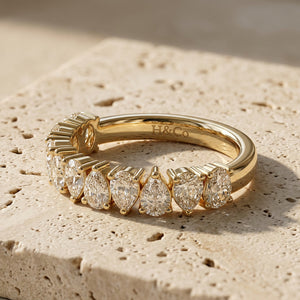
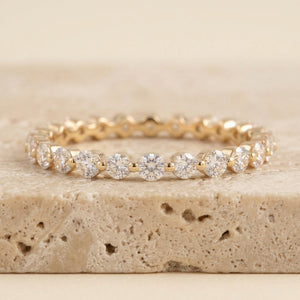
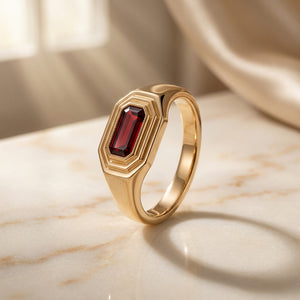
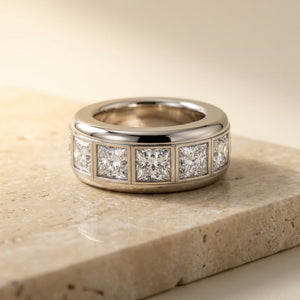
Every piece at Heritage & Co. is solid gold. No exceptions. Not because it's a marketing line, but because we refuse to sell you something that fails.
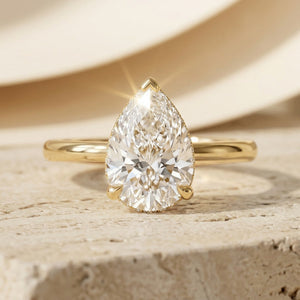
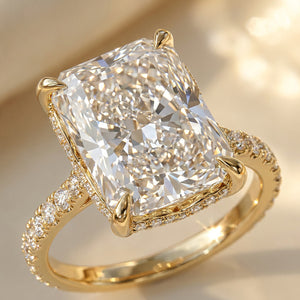
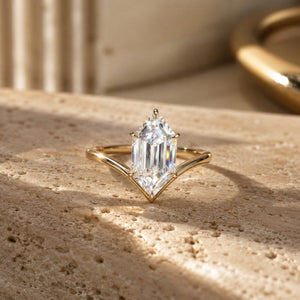
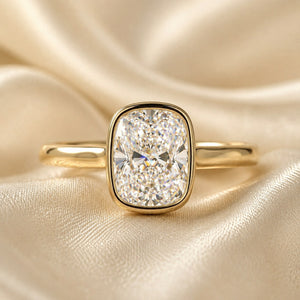
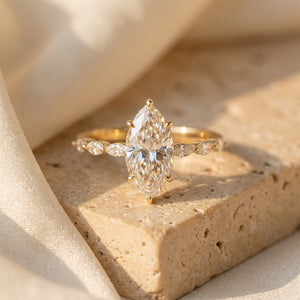
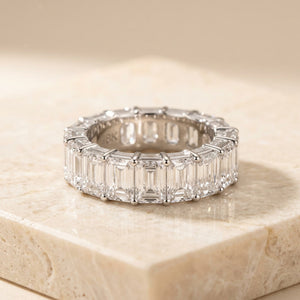
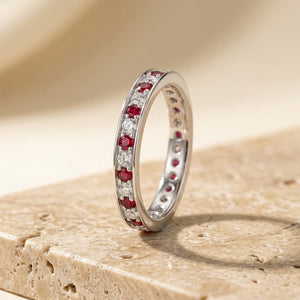
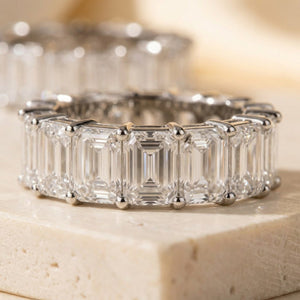
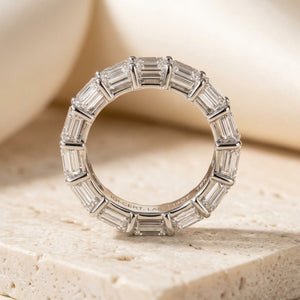
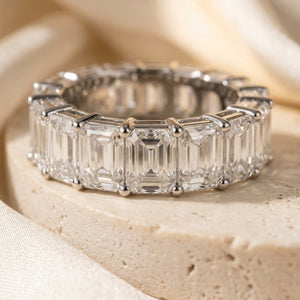
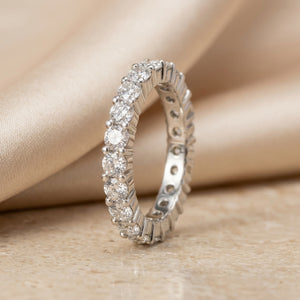
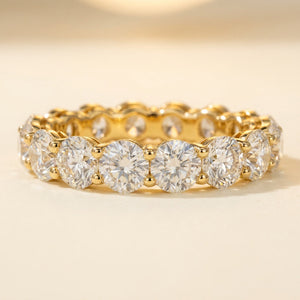
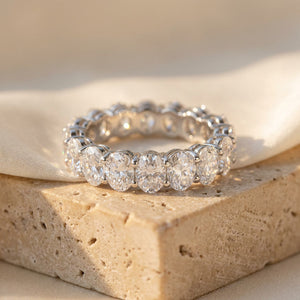
The INVICTA Collection — GRA-certified moissanite, D/VVS1, set in solid 9K gold. Priced from R15,500 to R20,000.
The AETERNA Collection — GRA-certified moissanite, D/VVS1, set in solid 14K gold. Priced from R16,000 to R28,000.
The CLARITAS Collection — IGI-certified lab diamond, D/VVS1, set in solid 18K gold. Priced from R30,000.
All rings are made to order. All pieces can be resized, repaired, and refinished by any qualified jeweller — now or in thirty years.
How to tell the difference before you buy
Ask directly: is this solid or hollow construction? A reputable jeweller will tell you immediately. If they deflect or seem unsure, that's your answer. Ask for the hallmark: look for the carat stamp (9K, 14K, 18K) and verify it's stamped into the metal, not just printed on a card. Weigh it in your hand: hollow pieces are noticeably lighter than their size suggests. Solid gold has density. You can feel it. Check the price: if a 14K gold bangle is priced under R3,000, ask why. At current gold prices, a solid 14K bangle of any meaningful size costs significantly more to produce than that.
Jewellery is one of the few categories where the thing that makes it worth buying — the material itself — is completely invisible to the untrained eye. The industry has exploited this gap for a long time. You deserve to know what you're actually paying for.
Browse our solid gold collections: Engagement Rings · Fine Jewellery · AETERNA Collection · INVICTA Collection
Read more: Solid Gold vs Gold Plated Jewellery: What's the Difference? · 9K, 14K or 18K Gold: Which Should Your Engagement Ring Be?