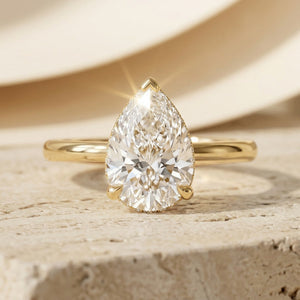
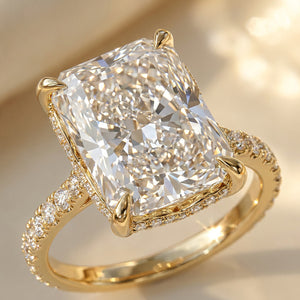
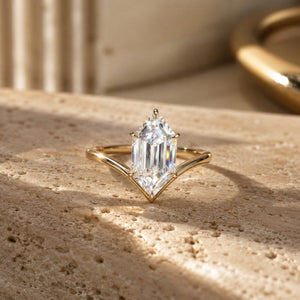
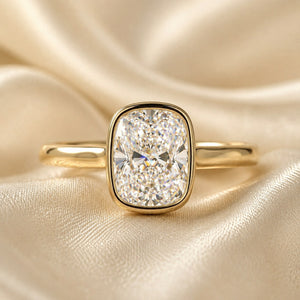
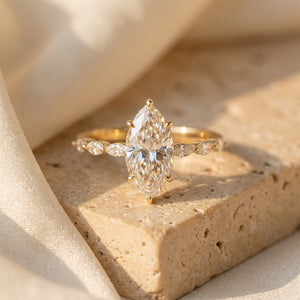
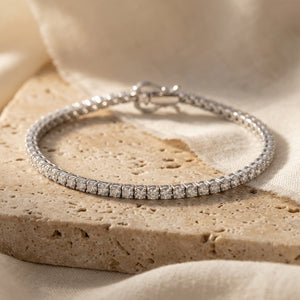
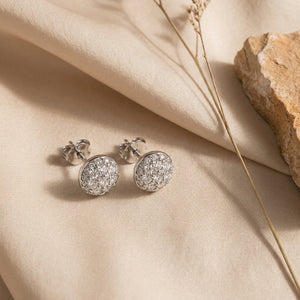
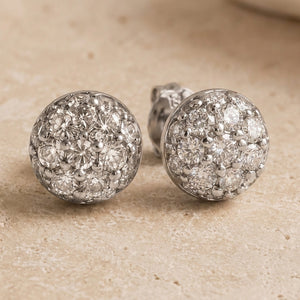
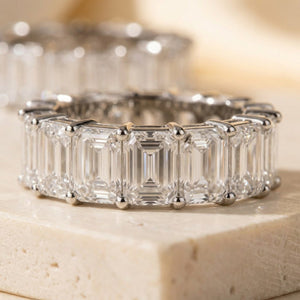
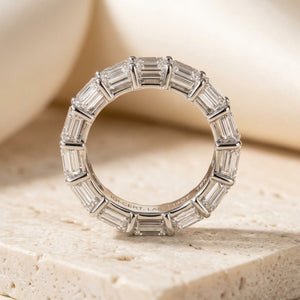
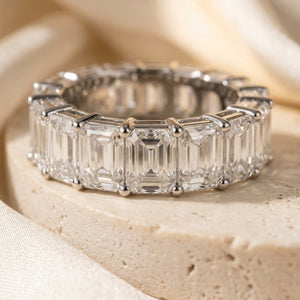
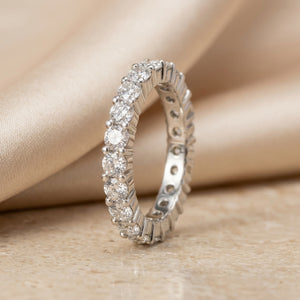
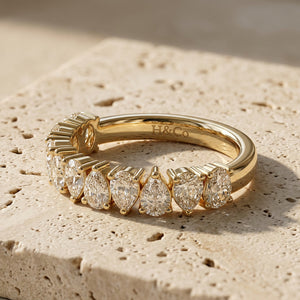
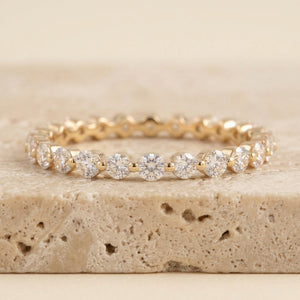
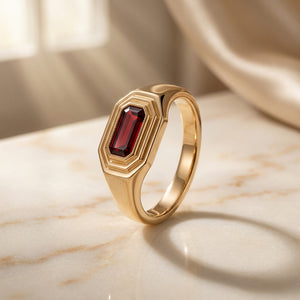
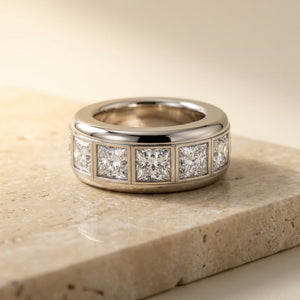
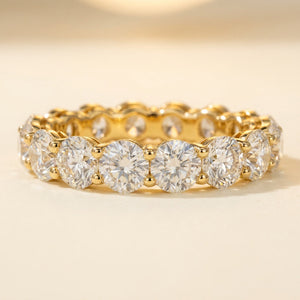
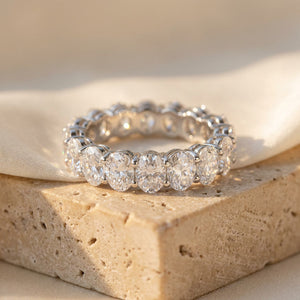
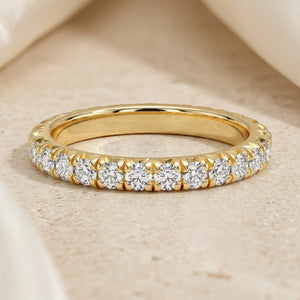
The choice between a lab diamond and a moissanite isn't about which stone is "better" — it's about which one is right for the specific person wearing it for the next fifty years. One is a diamond in every measurable sense. The other produces more fire than anything else at its price point. Here's how to tell them apart, and how to decide.
What Is a Lab Diamond?
A lab diamond is a real diamond — chemically, physically, and optically identical to a mined diamond — grown in a controlled laboratory environment rather than extracted from the earth. Lab diamonds are graded using the same 4C criteria (cut, colour, clarity, carat) by gemological institutes like the IGI.
Because they bypass the mining process entirely, lab diamonds are significantly more affordable than earth-mined diamonds and carry a far smaller environmental footprint. A 1.0ct lab diamond engagement ring from Heritage & Co. starts from R24,995 — a fraction of the cost of a comparable mined stone.
What Is a Moissanite?
Moissanite is a gemstone composed of silicon carbide, originally discovered in a meteor crater in 1893 by Nobel Prize-winning chemist Henri Moissan. Natural moissanite is extraordinarily rare, so virtually all moissanite sold today is lab-created. It is one of the hardest gemstones on earth (9.25 on the Mohs scale, second only to diamond at 10), making it perfectly suited for everyday wear.
Moissanite has a higher refractive index than diamond, producing more fire and brilliance — the rainbow flashes of light that make a stone sparkle. Some buyers love this extra sparkle; others prefer diamond's slightly more subdued, white brilliance. At Heritage & Co., a moissanite engagement ring starts from R14,995 for a 1.5ct stone in 10K gold.
Lab Diamond vs Moissanite: Head-to-Head Comparison
| Feature | Lab Diamond | Moissanite |
|---|---|---|
| Composition | Carbon (same as mined diamond) | Silicon carbide |
| Hardness (Mohs) | 10 | 9.25 |
| Brilliance | White/icy sparkle | Fiery rainbow brilliance |
| Price (1.0ct, set in gold) | From R24,995 | From R14,995 |
| Price (2.0ct, set in gold) | From R54,995 | From R16,000 |
| Ethical sourcing | 100% lab-grown, conflict-free | 100% lab-grown, conflict-free |
| Durability | Exceptional — lasts a lifetime | Exceptional — lasts a lifetime |
| Resale value | Low (lab diamonds depreciate) | Very low |
| Best for | Buyers who want "a diamond" | Buyers who want maximum size and sparkle for budget |
Heritage & Co. Pricing: Moissanite vs Lab Diamond in South Africa
Heritage & Co. is a proudly South African fine jewellery brand. All engagement rings are crafted in gold (10K, 14k, or 18k) — never sterling silver, which tarnishes and contradicts our philosophy of jewellery engineered for lifetime wear.
Moissanite Engagement Rings
- 1.5ct in 10K gold (simple solitaire): from R14,995 — our INVICTA collection entry point
- 2.0ct in 14k gold (solitaire): from R16,000
- 2.0ct in 14k gold with pavé band: from R27,995
- 3.0ct in 14k gold with halo and pavé: from R28,000
Lab Diamond Engagement Rings
- 1.0ct in 14k gold (solitaire): from R24,995
- 1.5ct in 14k gold (solitaire): from R28,000
- 2.0ct in 14k gold (solitaire): from R30,000
- 3.0ct in 14k gold (solitaire): from R64,995
For lab diamonds 1ct and above, Heritage & Co. uses 14k gold exclusively. Our full engagement ring collection is available to browse online.
Which Stone Is Right for You?
Choose Moissanite If:
- You want the biggest, most eye-catching stone for your budget
- You love vibrant, fiery sparkle
- You want a premium ring at an accessible price point
- Ethical sourcing matters but you don't specifically need a diamond
Choose a Lab Diamond If:
- You or your partner specifically want a diamond — full stop
- You prefer a cleaner, icier white sparkle
- You want the ability to certify the stone via IGI grading
- You want the prestige of "it's a diamond" without the mined diamond price
Does Size Look Different Between Moissanite and Lab Diamond?
Moissanite has a slightly lower density than diamond, meaning a 1.0ct moissanite will appear very marginally larger in diameter than a 1.0ct diamond — though the difference is negligible in practice. Both stones are sold by carat weight, and a 2.0ct stone in either material looks impressively substantial on the hand.
Are Both Stones Durable Enough for Daily Wear?
Yes — absolutely. Both lab diamonds and moissanite are among the hardest materials on earth. Neither will scratch from everyday activities. Both are safe for daily wear. The main risk for any ring is impact damage to the setting or prongs rather than the stone itself, which is why Heritage & Co. uses solid gold settings on every engagement ring — not plated metal or silver.
Can You Tell the Difference by Eye?
For most people, in most lighting conditions: no. The most tell-tale difference is moissanite's rainbow fire effect under direct light — particularly in sunlight or under spotlights. Lab diamonds produce whiter, more traditional sparkle. Both are near-colourless and eye-clean at Heritage & Co. quality grades.
What About the Metal?
At Heritage & Co., we are a gold-only engagement ring brand. Our range is crafted exclusively in 10K, 14k, and 18k gold. We do not offer silver engagement rings — silver tarnishes over time and simply does not meet the "engineered for a lifetime" standard our rings are built to.
For moissanite, 10K gold is a beautiful and durable choice. For lab diamonds 1ct and above, we use 14k gold as the minimum setting metal.
Ready to Find Your Ring?
Heritage & Co. offers both moissanite and lab diamond engagement rings, hand-crafted in solid gold and available for custom design. Whether you're drawn to the fiery brilliance of moissanite or the timeless prestige of a lab diamond, we'll help you find the perfect ring.
Browse our engagement ring collection →