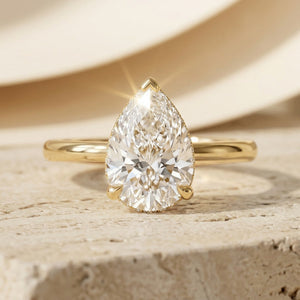
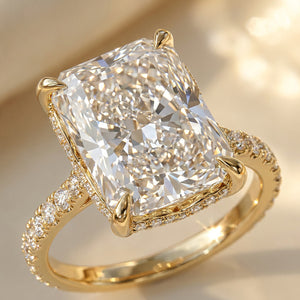
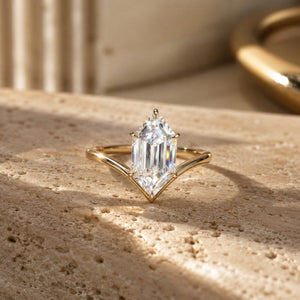
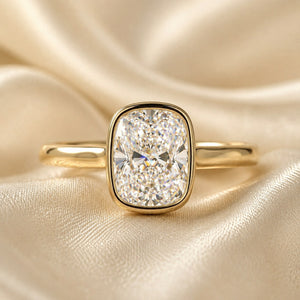
The Question Everyone's Asking — But Nobody Answers Honestly
If you're considering a moissanite engagement ring, you've probably asked this: will people know? Not the gemologist with a loupe — the person sitting across from her at dinner. The friend who reaches for her hand to look. Her mother. The honest answer isn't "no one can tell." The honest answer is more interesting than that.
What Moissanite Looks Like in Real Life
Moissanite has a higher refractive index than diamond — 2.65–2.69 versus diamond's 2.42. This means moissanite actually disperses more light than a diamond, producing an intense rainbow-fire effect under direct lighting. Some people love this. Some people prefer diamond's whiter, icier sparkle. Neither is objectively superior — but they are different.
In lower or ambient light, moissanite and diamond are essentially indistinguishable to the naked eye. The difference, when visible, shows up most in direct sunlight or under bright overhead lighting — where moissanite produces more coloured flash. If she works under fluorescent lights, she may notice more colour play. If she's mainly in warm indoor lighting, the distinction is minimal.
Who Actually Notices
Gemologists and experienced jewellers can identify moissanite with a loupe or diamond tester (see below). Beyond that, the people most likely to notice are those who:
- Own a diamond themselves and spend time comparing
- Work in the jewellery industry
- Have specifically researched moissanite before
The average person — friends, family, colleagues — will not know. They'll see a brilliant ring, they'll see the size, they'll see it catching the light. That's what gets noticed. Not the refractive index.
What About Diamond Testers?
Standard thermal diamond testers — the ones most jewellers use — actually read moissanite as a diamond. This is because moissanite conducts heat similarly. Multi-tester devices (which test both thermal conductivity and electrical conductivity) will distinguish moissanite from diamond — but these are specialist equipment, not something your future mother-in-law is carrying to the engagement party.
The Real Question
The question isn't whether an expert can distinguish them under the right conditions. The question is whether the ring is something she'll love, be proud of, and wear with confidence for the rest of her life.
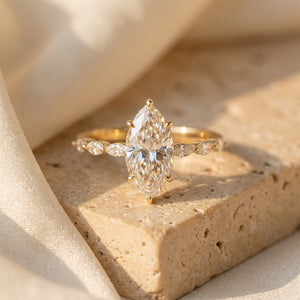
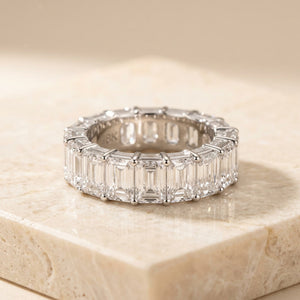
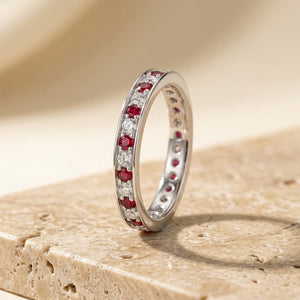
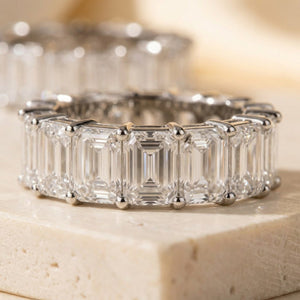
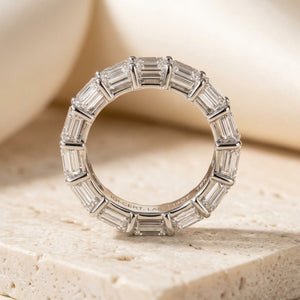
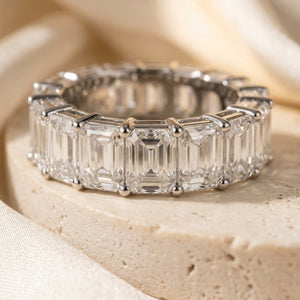
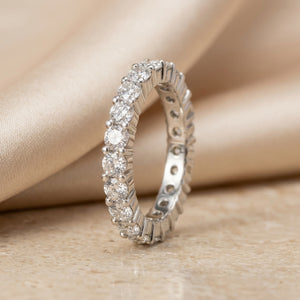
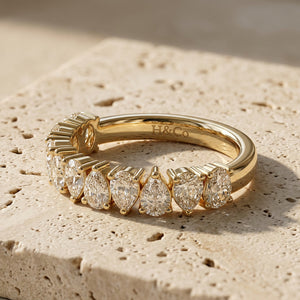
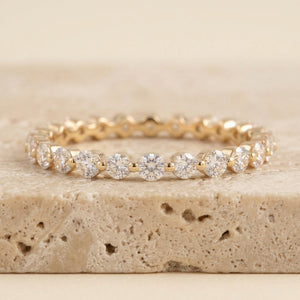
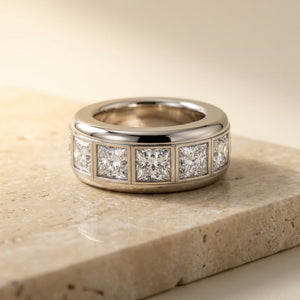
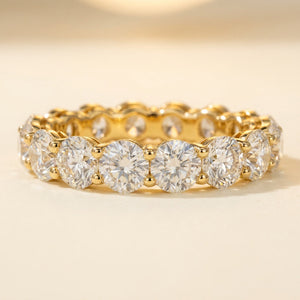
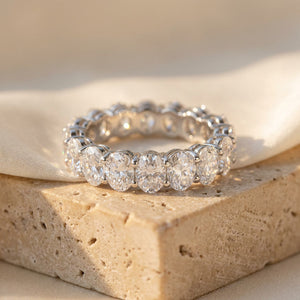
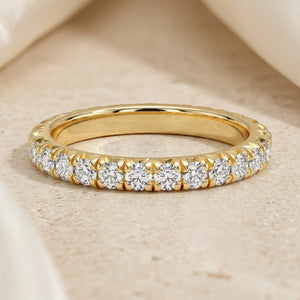
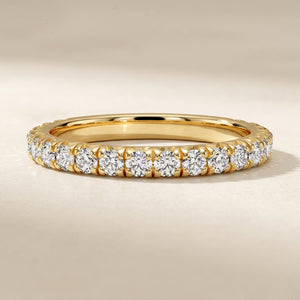
Every moissanite in the Heritage & Co. INVICTA and AETERNA collections is D colour, VVS clarity, and GRA-certified. That means it's at the top of the quality spectrum for moissanite — the most colourless, most brilliant grade available. Set in solid gold, from R15,500. The ring will be striking. The certificate will be real. And the stone will outlast you both.
If you want a stone that is, definitively, a diamond — our CLARITAS collection offers IGI-certified lab-grown diamonds from R30,000 in 18K gold. A diamond, certified by the world's leading authority, at a fraction of the mined price.