Golden South Sea Pearls South Africa
Pinctada maxima. The largest cultured pearl. Naturally gold.
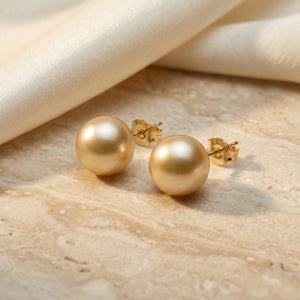
A Golden South Sea pearl is grown inside the gold-lipped variant of the Pinctada maxima, a mollusc native to the warm waters of northern Australia, the Philippines, and Indonesia. The oyster is the largest pearl-producing species in the world, with adult specimens reaching 30cm or more across the shell. The size of the host explains the size of the pearl. South Sea pearls run 9mm to 18mm, with most commercial harvests clustering at 11mm to 14mm. The colour comes from the gold-lipped mantle tissue, which deposits a layer of nacre with natural gold pigmentation. No dye, no treatment.
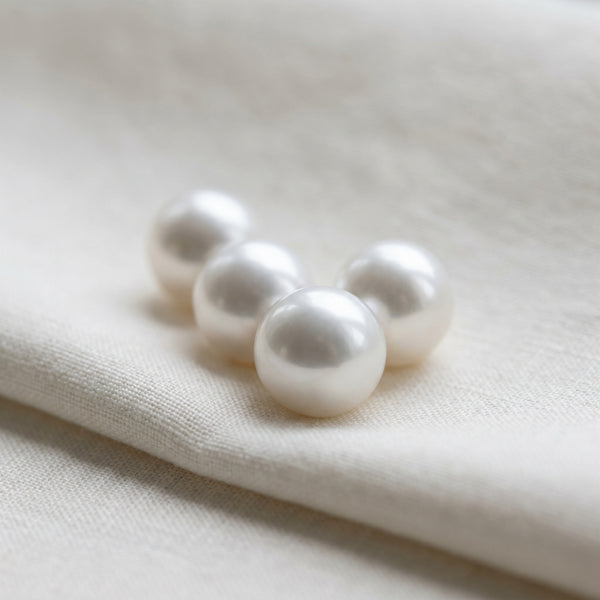
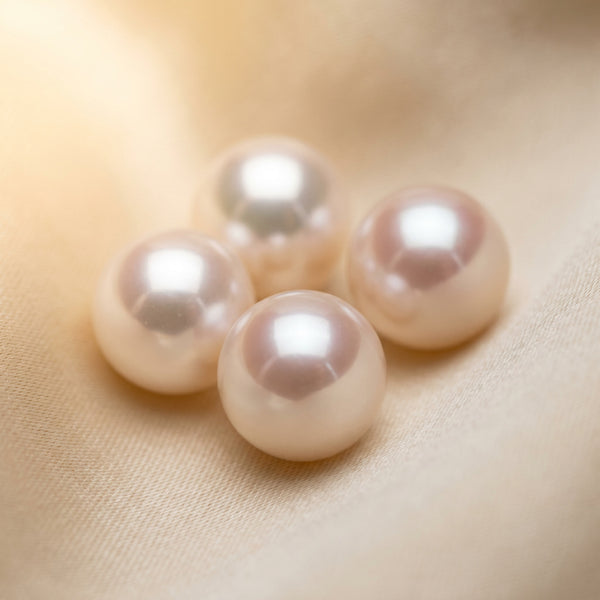
Heritage & Co.'s AUREA collection uses Golden South Sea pearls graded AAAA. AAAA is the highest commercial grade for South Sea pearls. The grading covers four traits: luster (the depth and sharpness of the surface reflection, often called orient), surface cleanliness (95 percent or more of the surface free of visible imperfection), shape (round or near-round, with off-round and baroque shapes graded separately), and nacre thickness. South Sea pearls naturally develop thicker nacre than Akoya, typically 2mm or more, which is why they keep their luster longer with normal wear.
Where Golden South Sea Pearls Come From
The Philippines and Indonesia are the main producers of Golden South Sea pearls. The Pinctada maxima farms operate in protected coastal waters in Palawan (Philippines), Sulawesi (Indonesia), and West Papua (Indonesia). Cultivation cycles run 24 to 30 months from nucleus implantation to harvest, longer than Akoya or Tahitian, because the larger oyster works at a slower nacre deposition rate.
The gold colour is naturally produced. The intensity ranges from pale champagne through warm honey to deep "24K gold" with bronze undertones. The deeper colours are rarer. Most harvests produce a mix of pale, medium, and deep gold pearls, with the deep gold pearls commanding the highest prices at auction. South Sea Golden pearls are among the most expensive cultured pearls in the world by weight.
Why Golden South Sea Pearls Matter
Three things make Golden South Sea pearls structurally distinct from other cultured pearls. First, size. They are the largest commercially cultivated pearls in the world. Second, natural colour. The gold is not enhanced or dyed. Third, longevity. The thick nacre means a well-cared-for South Sea pearl retains its luster for decades, not years.
The trade-off is rarity and cost. Pinctada maxima cultivation is slower, the surface acceptance rate is lower, and the colour grade is not uniform across a harvest. A matched strand of deep gold pearls of consistent size can take years to assemble.
Heritage & Co.'s AUREA Collection
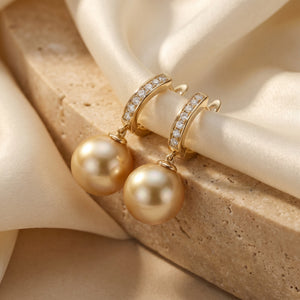
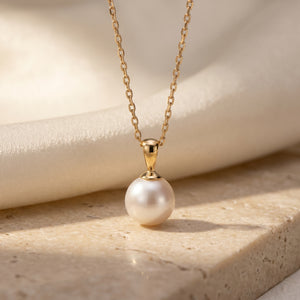
AUREA takes its name from the Latin feminine for golden, after the natural colour of the Pinctada maxima. Every piece uses AAAA grade Golden South Sea pearls. Metal options are 18K gold or 950 platinum. The collection includes single-pearl studs, pearl-and-pavé pendants, station bracelets, and the COURONNE crown setting.
Heritage & Co.'s position on pearls: cultured only, graded type by type to the specific scale, set in solid metal only, 20 year defect warranty. The AUREA collection is made to order.
How Golden South Sea Compares to Other Pearls
South Sea pearls (white and gold variants) are the largest of the four main cultured pearl types. Akoya is the smallest and brightest. Tahitian sits in the middle on size and is the only naturally dark type. Golden South Sea has the size advantage of South Sea and the unique advantage of natural colour, which is why a single high-grade Golden South Sea pearl can sit on its own without diamond or metal flourish.
Pearl Care
South Sea pearls are slightly more resilient than Akoya, but the maintenance protocol is the same across all cultured pearls. Avoid ultrasonic cleaning, steam, harsh detergents, and chlorine. Wipe with a soft cloth after wear to remove skin oils, which over time can dull the surface. Store flat in a soft pouch. For strung necklaces, restring every two to three years.
For the full pearl care guide, read our Heritage Journal pearl care article.
View the Collection
Browse the AUREA Golden South Sea AAAA Collection, studs, drops, pendants, and station bracelets in 18K gold and 950 platinum.