Akoya Pearls South Africa
Japanese saltwater. Tennyo grade. The pearl that built the modern jewellery industry.
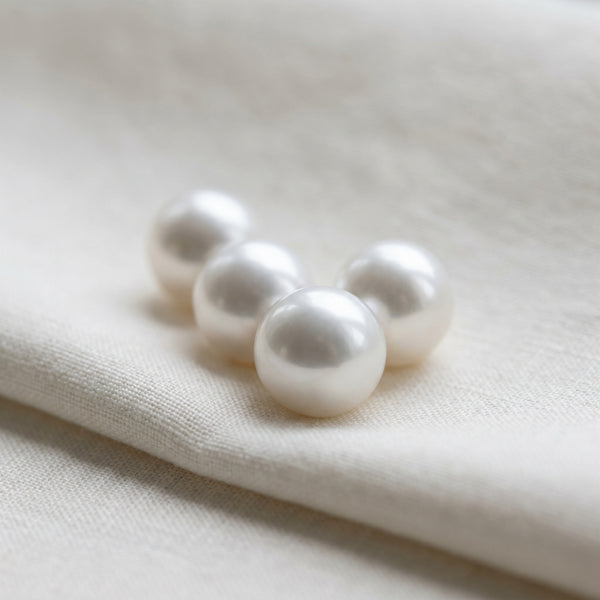
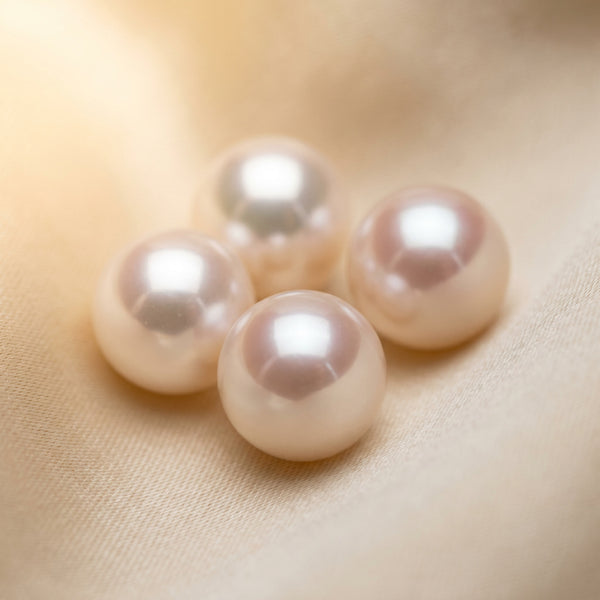
An Akoya pearl is grown inside the Pinctada fucata oyster in the cold waters off Mie Prefecture, Japan. The oyster is small. The pearl it produces is small too, typically 6mm to 9mm. What it sacrifices in size, it gives back in luster, the mirror-bright surface that distinguishes a saltwater pearl from a freshwater one, and that no other cultured pearl matches.
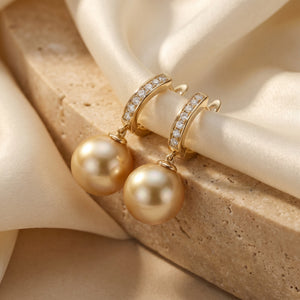
Heritage & Co.'s LUNAIRE collection is built on Akoya pearls graded Tennyo. Tennyo is the highest commercial grade Akoya pearls receive. The grading covers four traits: luster (mirror-bright, with sharp reflection at the surface), surface cleanliness (under 10 percent visible imperfection at standard magnification), roundness (perfect or near-perfect spherical shape), and nacre thickness (the layered crystalline coating that gives the pearl its depth). A Tennyo Akoya meets all four.
Where Akoya Pearls Come From
Modern Akoya farming began in Mie Prefecture in 1893 when Kokichi Mikimoto cultivated the first commercial Akoya by inserting a small mother-of-pearl bead into the oyster as a nucleus. The oyster then coats the bead with nacre over 18 to 24 months. The resulting pearl is a thin layer of nacre over a hard bead core. This is why Akoya pearls have such bright luster, the bead provides a reflective base, and the nacre layer refracts light cleanly. It is also why Akoya pearls are smaller than other cultured pearls, the oyster simply cannot accept a large nucleus.
Akoya cultivation is now done in Japan, China, and Vietnam. Japanese Akoya remains the standard the others measure against. Mie Prefecture, Ehime, and Nagasaki are the three main Japanese growing regions. Each season's harvest is graded against the Japanese Pearl Promotion Association standards.
How Akoya Compares to Other Pearls
Akoya is one of four cultured saltwater pearl types. The others are Tahitian (black-lipped oyster, French Polynesia, larger, naturally dark), South Sea (Pinctada maxima, Australia and the Philippines, largest of all cultured pearls, naturally white or gold), and freshwater (cultivated in mussels, fastest growing, the most accessible type).
Within saltwater pearls, Akoya is the smallest and the brightest. South Sea pearls grow up to 18mm. Tahitians grow up to 14mm. Akoya tops out at 9 to 10mm. But the small size is the trade-off for the luster, that mirror-finish quality that makes an Akoya look polished even before it is polished.
Heritage & Co.'s LUNAIRE Collection
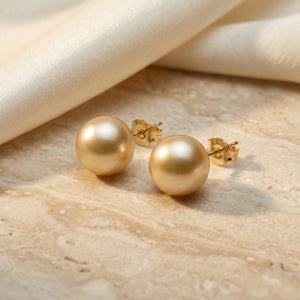
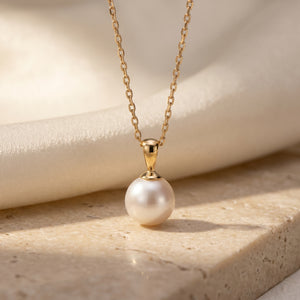
LUNAIRE takes its name from the French word for lunar, after the pale silver-white reflection of the Tennyo Akoya. Every piece uses Tennyo grade Japanese Akoya. Metal options are 14K gold or 950 platinum. Settings range from simple solitaire studs to multi-pearl station drops, designed to wear daily.
Heritage & Co.'s standing position on pearls: we use cultured pearls only (no claim of natural), graded type by type to the specific grading scale (Tennyo for Akoya, AAAA for freshwater and Tahitian and South Sea Golden), set in solid metal only (no plating, no hollow construction, 20 year defect warranty).
Pearl Care
Akoya pearls require less maintenance than most fine jewellery, but the maintenance they need is specific. Never expose pearls to ultrasonic cleaning, steam, harsh detergents, or chlorine. Wipe with a soft cloth after wear to remove skin oils. Store flat in a soft cloth pouch (not hanging) to avoid stress on the silk thread. Have a strung necklace restrung every two to three years if worn weekly, or every five years if worn occasionally.
For the full pearl care guide, read our Heritage Journal pearl care article.
View the Collection
Browse the LUNAIRE Akoya Tennyo Collection, earrings, drops, pendants, and station bracelets in 14K gold and 950 platinum.