Two Styles. One Decision. Here's How to Get It Right.
Most engagement ring conversations eventually come down to this: solitaire or halo? Clean and classic, or layered and brilliant? It sounds simple but it's one of the most personal choices in the ring-buying process — and getting it wrong (buying the solitaire when she wants the halo, or vice versa) is an expensive lesson. Here's how to read which she actually wants.
The Solitaire: Confidence in Simplicity
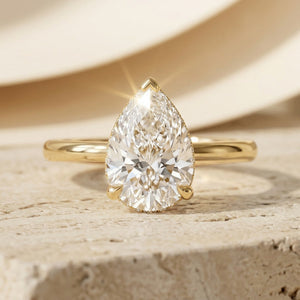
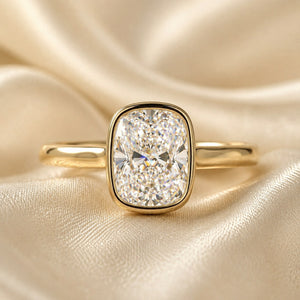
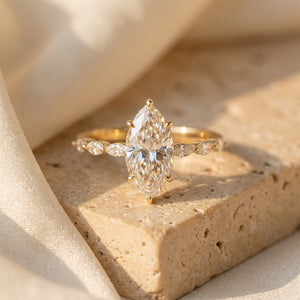
A solitaire engagement ring features a single centre stone with no surrounding stones. The setting — whether four-prong, six-prong, or bezel — is designed to disappear, letting the stone take all the attention. There's no competition for the eye. Just the stone, the light it captures, and the hand it's on.
Solitaires are the choice of someone who believes the stone is enough. And when the stone is right — a DEF-colour, VVS-clarity moissanite with a refractive index higher than diamond — it is enough. More than enough. The Heritage & Co. INVICTA collection is built entirely on this principle: stone first, setting second, from R15,500 in solid 10K gold.
She might want a solitaire if she:
- Wears minimal jewellery generally — stud earrings, simple chains
- Gravitates toward clean, architectural design in her style
- Has said anything like "understated", "classic", or "timeless"
- Works with her hands and prefers rings that don't catch on things
The Halo: Architecture That Amplifies
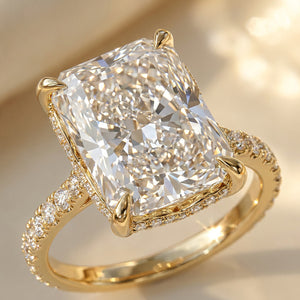
A halo setting adds a ring of smaller stones (typically pavé-set diamonds or moissanites) around the centre stone. The effect is dramatic: the centre stone reads larger, the ring catches light from every angle, and the overall visual impact is immediately apparent from across a room.
Halo rings are not "more" than solitaires in any objective sense — they're a different aesthetic philosophy. They reward closer inspection. They layer. The Heritage & Co. AETERNA collection offers halo and pavé designs in solid 14K gold, from R16,000. Every design is engineered to amplify the centre stone while adding genuine craft to the setting itself.
She might want a halo if she:
- Wears statement jewellery — layered necklaces, chandelier earrings
- Notices and comments on other people's engagement rings
- Wants maximum visual impact and presence
- Has ever described a ring she loves as "stunning" rather than "beautiful"
What About Pavé Bands?
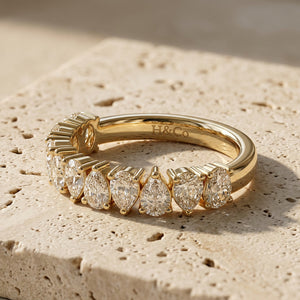
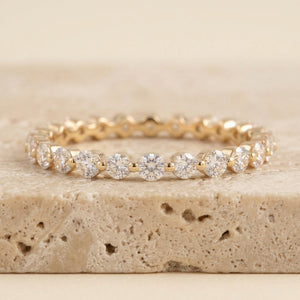
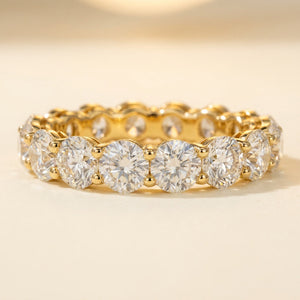
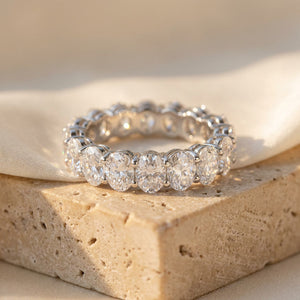
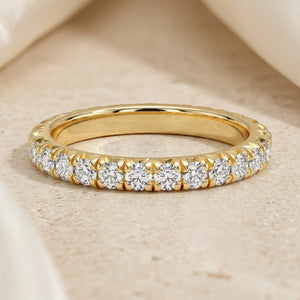
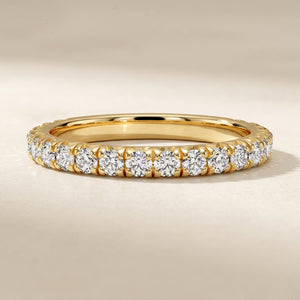
A pavé band adds small stones along the shank of the ring — without a full halo around the centre stone. It's the middle ground: more presence than a plain solitaire, less visual complexity than a full halo. The AETERNA collection includes pavé-band options as well as combination halo-and-pavé designs — if she's somewhere between the two camps, these are worth looking at.
Which Costs More?
Halo and pavé designs cost more than clean solitaires — the additional stones and metalwork require additional labour and material. At Heritage & Co., the INVICTA solitaire collection starts from R15,500. AETERNA halo and pavé designs start from R16,000. The gap is meaningful but not prohibitive — and in both cases, you're getting solid gold, GRA-certified moissanite, and a ring built for a lifetime of daily wear.
The One Question That Decides It
Look at what she already wears. Her everyday jewellery — earrings, bracelets, rings — tells you everything. If she gravitates toward simple and considered, she's a solitaire. If she layers, stacks, and goes for statement pieces, she's a halo. Jewellery style is the most reliable signal, and it's been on display the whole time.