Long before antibiotics, long before germ theory, and long before anyone had seen a bacterium under a microscope, wealthy households across the ancient world stored their water in silver jugs. Soldiers carried silver vessels. Physicians packed silver-lined surgical instruments. They didn't know the mechanism. They just knew it worked. It took until 1893 for science to catch up with three thousand years of empirical observation.
The Oligodynamic Effect
In 1893, Swiss botanist Wilhelm von Nägeli published research describing what he called the oligodynamic effect — from the Greek oligos (few, small) and dynamis (power). His finding: even trace concentrations of certain heavy metals — silver, copper, gold, mercury, zinc — are toxic to microorganisms. The quantities required are extraordinarily small. Silver at concentrations of parts per billion is lethal to a wide range of bacteria, fungi, and viruses.
The mechanism involves silver ions (Ag⁺). When metallic silver comes into contact with moisture, a tiny number of silver atoms lose an electron and become positively charged silver ions. These ions are highly reactive. They bind to the thiol groups (-SH) in bacterial enzymes — the molecular machinery that bacteria use for respiration and reproduction. When silver ions occupy these sites, the enzymes stop functioning. The bacterium cannot produce energy, cannot replicate, and dies. Silver ions also disrupt bacterial cell membranes and can interfere with DNA replication.
Critically: bacteria do not rapidly develop resistance to silver in the way they develop antibiotic resistance. Antibiotics target specific metabolic pathways, and a single mutation can create resistance. Silver disrupts multiple fundamental systems simultaneously — developing full resistance would require simultaneous mutations across several pathways, which is orders of magnitude less likely.
Alexander the Great's Water Jugs
Historical accounts describe Alexander the Great's army on campaign storing water specifically in silver vessels. The historian Quintus Curtius Rufus records that senior officers drank from silver cups while common soldiers drank from whatever they could find — and that the officers suffered far less from the dysentery that devastated armies in contaminated-water environments. Alexander's army marched through Persia, Afghanistan, and India — regions where waterborne disease would have been endemic. The silver storage may have been a meaningful tactical advantage.
The Romans embedded silver coins in drinking water barrels. Hippocrates — writing in the 5th century BCE — prescribed silver preparations for wounds and ulcers, describing its "disease-preventing" properties without being able to explain why. Medieval physicians packed wounds with silver thread. The phrase "born with a silver spoon in your mouth" didn't originally refer to wealth — it referred to the fact that wealthy children who were fed with silver cutlery from infancy had better survival rates from early childhood infections than those who ate with wooden or base-metal utensils. The silver spoon was a medical intervention disguised as a status symbol.
Modern Applications
The oligodynamic effect drives an enormous range of modern applications:
Medical devices: Silver-coated catheters, surgical instruments, and wound dressings are standard in hospitals specifically to reduce infection rates. Silver-impregnated wound dressings (such as Aquacel Ag) are used for burns and chronic wounds where bacterial contamination would otherwise impede healing.
Water purification: NASA used silver ionisation systems to sterilise water aboard the International Space Station. Several European countries used silver-lined water storage tanks in hospital and commercial settings. Some water filters use activated silver to prevent bacterial growth in the filter media itself.
Textiles: Silver fibres are woven into athletic clothing and medical scrubs to reduce bacterial growth and odour — bacteria breaking down sweat is what causes the smell; silver prevents the breakdown.
Food contact surfaces: Cutting boards, kitchen surfaces, and food processing equipment in some high-standard commercial kitchens use silver-impregnated materials specifically for pathogen control.
Electronics: Silver's conductivity (the highest of any element) made it ubiquitous in electronics, but silver-coated touch screens in some medical settings also leverage the antimicrobial effect.
Fine Silver vs Sterling Silver
Fine silver (Ag 999) is 99.9% pure silver — the maximum available in commercial form. It is very soft and not practical for jewellery that experiences daily wear; rings in fine silver would scratch, deform, and lose shape quickly. Fine silver is used for very flat pieces — pendants, charms, settings for delicate stones.
Sterling silver (925) is 92.5% silver alloyed typically with 7.5% copper. The copper adds the hardness and durability that makes it workable for rings, bracelets, and settings that experience physical wear. The alloying does not meaningfully affect the antibacterial properties — at 92.5% silver content, there is ample surface silver to provide the oligodynamic effect on contact.
The well-known tarnishing of silver (the dark grey-black layer that develops over time) is a reaction between surface silver and atmospheric sulphur compounds — silver sulphide (Ag₂S). It doesn't affect the silver beneath and polishes off easily. It has no relationship to the antibacterial effect.
Why Heritage & Co. Uses Solid Gold, Not Silver
Silver is genuinely remarkable — historically important, scientifically interesting, and measurably effective as an antimicrobial surface. But for fine jewellery designed to be worn every day for decades, silver has limitations that gold does not. Silver tarnishes, requiring regular polishing to maintain its appearance. Sterling silver's copper content can cause skin reactions in some people (the green discolouration that many experience is a copper oxidation reaction, not silver). And silver's softness, even in the 925 alloy, means it wears, scratches, and loses definition faster than gold alloys.
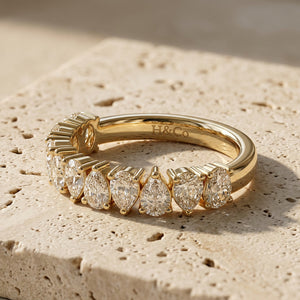
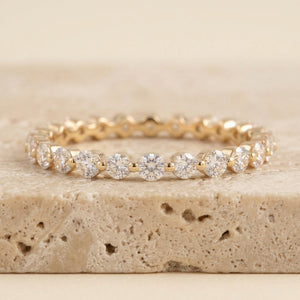
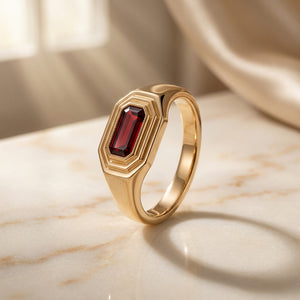
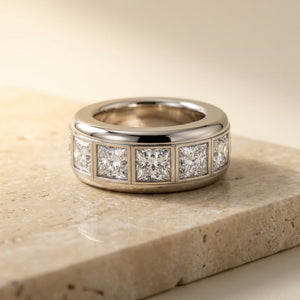
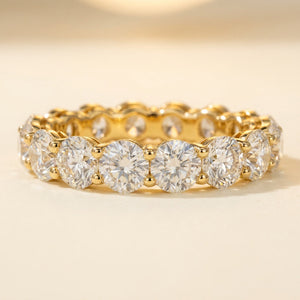
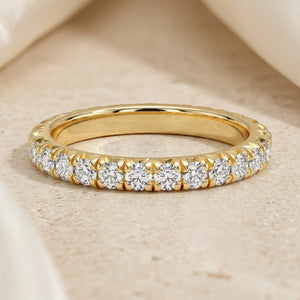
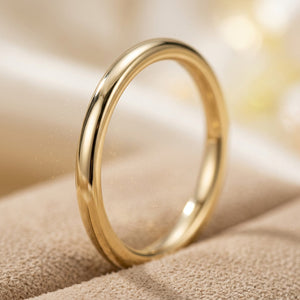
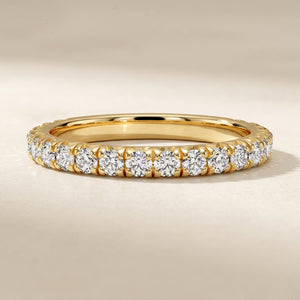
For rings worn daily — engagement rings, wedding bands, fine jewellery that becomes part of a person — solid gold is the appropriate material. It doesn't tarnish. It doesn't react with skin. And it lasts, unchanged in composition, for generations. The rings we make are designed to outlast their owners and pass to the next generation looking the same as the day they were made.
If you want to find yours, chat with us on WhatsApp — we'll help you choose the right metal and stone for how you actually live.
Explore Heritage & Co.
- Engagement Rings — solid gold, GRA & IGI certified stones
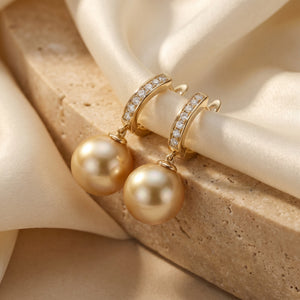
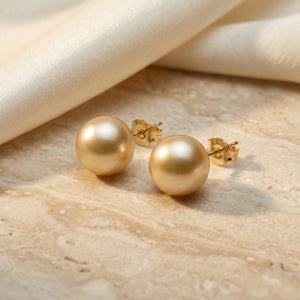
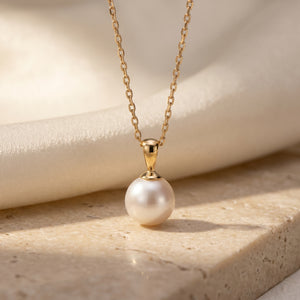
- Fine Jewellery — earrings, necklaces, bangles in solid gold
- Engagement Ring Price Guide for South Africa